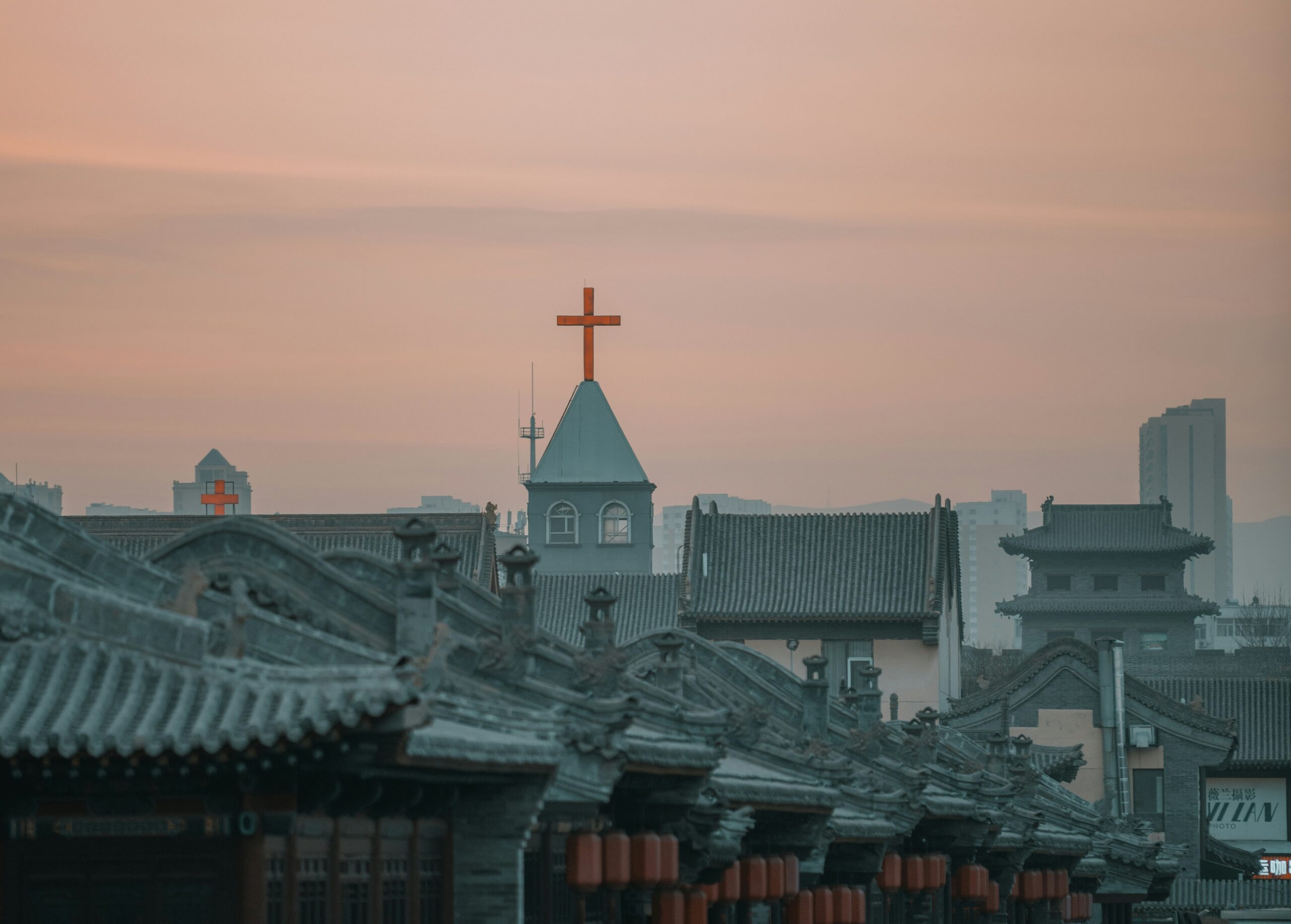
This article was originally posted on the Columbia Crown & Cross Fall 2016 Print Issue.
谷歌AI的中文翻译在英文文本之后。如果中文翻译违反任何IP知识产权,请在评论区提出,我会删除中文版本。
In this article, I reflected deeply on my Chinese roots and my Christian faith. It’s not the most mature ponderings out there, but this was my way and will continue to be my way of reconciling my cultural and spiritual identities. (This article was edited for grammar.)
I was born in a small city called Taiyuan in the northern part of China. There, I spent my first sixteen years of life. Growing up in a traditional Chinese family, I was immersed in the culture and practice of rituals and customs stemming from Ancient Chinese civilizations. I truly never realized how many practices I had been accustomed to until three years ago, when I came to the United States, where I had to be reminded from time to time over the phone of traditions that had once been second nature to me. that I would easily forget as I gradually get more and more tuned into the American way of living.
With the fear of losing my cultural identity mixed up with a doubt for its very value, I embarked on an intellectual quest to reexamine my own cultural roots. My views on the Chinese religions and customs then evolved over the next three years. The main shift originated from my change in perspective from agnostic to Christian that gradually took place after I came to the U.S. for high school. The high school was a private Christian school where the students were required to take a Bible course every year. I started not knowing anything about Christianity, and when I learned of the sacrificial rituals in the Old Testament, I felt that they sounded eerily similar to the Chinese rituals. Thus, I had a similar, ambivalent reaction to the Christian faith as I did to the Chinese religions. I thought Christianity was the same story spoken by a different tongue: if you want this, you do as I say, and then you will have it. Religion was analogous to an exchange of conditions with a deity so that our own wishes might be fulfilled. However, through reading the Bible and praying, I saw the difference offered through Christianity, the promise of redemption through Jesus. What God revealed to me was astounding, and what I was able to see through Christianity was life-changing. I encountered Christ, and in January of 2015, I converted to Christianity.
Yet I still had questions. One that particularly persisted was why the ancient Chinese and the Hebrews seemed to take many similar approaches regarding communication with the divine? Was there something the Ancient Chinese civilizations understood about communicating with God? Had I written them off too quickly? These questions led me to reexamine the relationship between prayer and sacrifice in both the Ancient Chinese and Biblical traditions. I found that they shared a common understanding that a sacrifice was needed in order to communicate with the divine, and they both often utilized intermediaries to facilitate the communication between the divine and the rest of the people. Yet despite these similarities, the gospels provided a crucial difference in the way that Christians can approach prayer that helped affirm my faith in Christ.
Since the Shang Dynasty (c. 1765-c. 1122 B.C.), historical evidence has shown that the Chinese people had started to communicate with the divine by means of offering and sacrifice. The most official and solemn sacrifice was the Border Sacrifice, the annual national sacrifice ceremony to Shang Di, the Lord on High, at the time of the winter solstice. It had been one of the most important rituals throughout the entire ancient Chinese history until the end of the last dynasty in 1911.1 In this ceremony alone, I discovered several ways in which the Chinese and the Hebrew traditions are similar, and two of which I found particularly notable.
The first parallel between the ancient Chinese and Hebrew traditions of communicating with the divine is the necessity of offering a sacrifice first. During the Border Sacrifice ceremony, the Chinese emperors would offer sacrifices, including food and treasures of the highest quality. Some examples would be unblemished animals, the finest jade objects, silk fabrics, and blood. The strictness of the offerings and sacrifice is very similar to what God asked for the Hebrews in Exodus:
Your lamb shall be without blemish, a male a year old. You may take it from the sheep or from the goats, and you shall keep it until the fourteenth day of this month, when the whole assembly of the congregation of Israel shall kill their lambs at twilight.2
Both the Hebrews and the ancient Chinese knew the importance of preparing the sacrifice just right so that their God would be appeased and they were able to pray to Him.
The second similarity is that both the Chinese and Hebrew traditions utilize intermediary parties to facilitate communication with the divine. For the Israelites, the priests were the mediators between God and man. They were called the “ministers of the LORD” in the book of Joel.3 For the Chinese people, the emperors were considered to be the most sacred ones to offer sacrifices and to pray. They called themselves “Tianzi”, which meant the son of “Tian”, the heaven or the most supreme. Similar to the Hebrew priests who were required to be entirely pure in order to perform their duties in the tabernacles,4 the Chinese emperors would start fasting three days before the ceremony so that they could be pure and acceptable physically and spiritually in front of Shang Di.5 The emperors, though the most powerful and highest in status, had to lower themselves in the presence of Shang Di so that he could address the desires and needs of the country, such as a good harvest and favorable weather.6
These similarities helped me see a demonstration of what is stated in Paul’s addresses to the Areopagus people in Acts:
The God who made the world and everything in it, being Lord of heaven and earth … gives to all mankind life and breath and everything. And he made from one man every nation of mankind to live on all the face of the earth, having determined allotted periods and the boundaries of their dwelling place, that they should seek God, and perhaps feel their way toward him and find him. Yet he is actually not far from each one of us…7
As the ancient Chinese explored the possibilities of the existence of deities, they showed a strong desire and a desperate need for a being higher than themselves. The fact that they approached communication with the divine in a similar manner as the Hebrews shows their way of “feeling their way” toward God. While I had viewed them as superficial rites or means of feudal control, I could now see the greater meaning behind my Chinese traditions, an attempt to seek God. The people not only had the common understanding that there were prerequisites and rituals that needed to be followed to ensure their prayers were heard by a more supreme being, but they also recognized the validity of a mediator who had to be pure in both the body and the soul.
However, despite the values I recognized in the ancient Chinese practices, the distinctions between the two belief systems are clear and apparent. A very important distinction was the way they discerned the will of the divine. While the ancient Chinese people interpreted divine will based on general revelation—what they were able to see with their eyes, the Hebrews in the time of the Old Testament often heard directly from God Himself. Throughout the Old Testament, God gave instructions to the Hebrews in different ways. Not only did he reveal Himself through nature, but he also gave instructions to Joseph in his dreams and talked to Moses through a burning bush. He gave the Ten Commandments, clearly outlining the rules, and He made the covenant. The Hebrews were able to know God through a much more direct way—Special Revelation. They often heard the unmistakable voice of God,8 while the Chinese often struggled to interpret ambiguous signs from nature. A common way for Chinese people to know about Shang Di’s will was through observing and responding to natural events. Most of the time in the Shang Dynasty, the emperors and priests would consult oracle bones for divination, asking for instructions about the future based on physical patterns observed on the bones.9 Thus, to the Chinese, praying to the divine was never like building an interactive relationship. Though the Chinese followed a way of communicating with their gods, there was no guaranteed way of knowing what they were saying back. As a result, the God or the various gods they worshipped most of the time turned out to be just idols they created. The ancient Chinese were mistaken in their conception of who God is.
The most important difference in Christianity is the promise offered through Jesus Christ in the New Testament. It is the promise that gives all humanity, regardless of cultural differences, the hope to build a personal relationship with God through prayer. In 1 Timothy, Paul writes, “For there is one God and one mediator also between God and the man Jesus Christ, who gave himself as a ransom for all.”10 Though the ancient Chinese had a desire for a higher being and prayed consistently for thousands of years in a respectful and solemn way, without the belief in Christ, who is the ultimate sacrifice that bridged the gap between us and God, there was no way for them to communicate with the real God and be assured and secured in the fact that He is listening.
Through tracing back to the origins and purposes of prayers and sacrifices, I better understood the meaning and reasoning behind Chinese traditions, but found a gap in the communication between the people and God that could only be overcome through Christ. Now with a Christian perspective, I am able not only to appreciate my cultural roots more, but also, and more importantly, to enjoy the meaningful relationship with God enabled by personal prayers.
References:
1Thong, Chan Kei, and Charlene Fu. Faith of Our Fathers: Discovering God in Ancient China = Xian Xian Zhi Xin. Singapore: IMprint Edition, 2007, 116
2Exodus 12:5-6 ESV
3Joel 1:9 and 2:17
4Leviticus 16:1-5
5Thong, Chan Kei, and Charlene Fu. Faith of Our Fathers: Discovering God in Ancient China = Xian Xian Zhi Xin. Singapore: IMprint Edition, 2007, 121
6Ibid., 116
7Acts 17:24-27
81 Samuel 1:3
9“Plutschow – Chinese Sacrificial Practices.” Accessed March 26, 2016. http://www.anthropoetics.ucla.edu/ap0102/china.htm.
101 Timothy 2:5-6
以下为谷歌AI Gemini翻译的中文版本。作者并未做任何编辑。
我出生在中国北方一座叫太原的小城市。在那里,我度过了人生的前十六年。在传统的中国家庭中长大,我沉浸在源自中国古代文明的文化、仪式和习俗之中。直到三年前我来到美国,我才真正意识到自己已经习惯了多少传统习俗。在异国他乡,我不得不时常通过电话让家人提醒那些曾被视为“第二天性”的传统,因为随着我逐渐适应美国的生活方式,我很容易就会忘记它们。
怀着对丧失文化认同的恐惧,以及对其价值本身的怀疑,我开始了一场重新审视文化根源的智力探索。在接下来的三年里,我对中国宗教和习俗的看法发生了演变。这种转变主要源于我来到美国读高中后,视角从不可知论者向基督徒的转变。那是一所私立基督教学校,学生被要求每年修读一门圣经课程。起初,我对基督教一无所知,但当我了解到《旧约》中的祭祀仪式时,我感到它们与中国的祭祀仪式有着惊人的相似之处。因此,我对基督教信仰产生了一种类似于对中国宗教的矛盾心理。我当时认为,基督教只是用不同语言讲述的同一个故事:如果你想要什么,就按我说的做,然后你就能得到它。宗教被类比为与神灵进行的条件交换,以满足我们自己的愿望。然而,通过研读圣经和祷告,我看到了基督教所提供的不同之处——通过耶稣实现的救赎应许。上帝向我启示的内容令我震撼,而我通过基督教所看到的景象改变了我的人生。我遇见了基督,并于2015年1月皈依了基督教。
然而,我仍然存有疑问。其中一个挥之不去的疑问是:为什么古代中国人与希伯来人在与神灵沟通的方式上表现出如此多的相似性?中国古代文明是否对与上帝沟通有着某种理解?我是不是太快否定了他们?这些问题引导我重新审视中国古代传统与圣经传统中祷告与祭祀的关系。我发现,两者都共有一种理解,即:为了与神灵沟通,祭祀是必要的;且两者通常都利用中介者来促进神灵与普通民众之间的沟通。尽管存在这些相似之处,福音书在基督徒祷告方式上提供了一个关键的区别,这帮助我坚定了对基督的信仰。
自商朝(约公元前1765年至公元前1122年)以来,历史证据表明中国人已经开始通过供奉和祭祀与神灵沟通。最正式、最庄严的祭祀是“郊祭”(Border Sacrifice),这是在冬至时节举行的向“上帝”(Shang Di,即上天之主)献祭的年度国家大典。直到1911年最后一个封建王朝结束,这始终是中国古代史上最重要的仪式之一。仅在这一个仪式中,我就发现了中国与希伯来传统在几个方面的相似之处,其中两点尤为显著。
第一个平行之处在于,在与神灵沟通之前,必须先进行祭祀。 在郊祭仪式中,中国皇帝会供奉最高品质的祭品,包括食物和财宝。例如,无瑕疵的牲畜、精美的玉器、丝绸和鲜血。这种对祭品的严格要求与上帝在《出埃及记》中对希伯来人的要求非常相似:
“你们的羔羊要是无残疾、一岁的公羊,可以从绵羊里取,也可以从山羊里取。要留到本月十四日,在黄昏的时候,以色列全会众把羊羔宰了。”
希伯来人和古代中国人都明白精心准备祭品的重要性,以便以此平息上帝/神灵,从而能够向祂祷告。
第二个相似之处是,中国和希伯来传统都利用中介方来促进与神灵的沟通。 对于以色列人来说,祭司是上帝与人之间的调停者。他们在《约珥书》中被称为“耶和华的仆役”。对于中国人来说,皇帝被认为是最神圣的祭祀和祈祷者。他们自称“天子”,意为“天”(即上天或至高无上者)之子。类似于希伯来祭司被要求必须完全洁净才能在会幕中履行职责,中国皇帝在仪式开始前三天就会开始斋戒,以便在上帝面前达到身体和精神上的纯洁与合格。皇帝虽然拥有最高权力,但在上帝面前必须谦卑自下,以便上帝能够眷顾国家的愿望和需求,如五谷丰登、风调雨顺。
这些相似之处帮助我看到了《使徒行传》中保罗在亚略巴古对众人所说的话的体现:
“创造宇宙和其中万物的上帝,既是天地的主……将生命、气息、万物,赐给万人。他从一本造出万族的人,住在全地上,并且预先定准他们的年限和所住的疆界,要叫他们寻求上帝,或者可以揣摩而得,其实他离我们各人不远……”
当古代中国人探索神灵存在的可能性时,他们表现出了对高于自身之存在的强烈渴望和迫切需求。他们与神灵沟通的方式与希伯来人相似,这一事实展示了他们“揣摩”上帝的路径。过去我曾将这些视为肤浅的礼教或封建统治的手段,而现在我能看到中国传统背后更深层的意义——一种对上帝的寻求。人们不仅普遍理解要确保祷告被至高者听见必须遵循前提条件和仪式,还认可了中介者在身心灵上必须保持纯洁的必要性。
然而,尽管我认可了古代中国习俗中的价值,这两种信仰体系之间的区别依然清晰且明显。一个非常重要的区别在于辨别神灵旨意的方式。古代中国人通过“普遍启示”(即他们用肉眼能看到的事物)来解释神旨,而《旧约》时代的希伯来人则通常直接听到上帝的声音。在整个《旧约》中,上帝以不同方式向希伯来人发出指示。祂不仅通过自然界启示自己,还在梦中指示约瑟,通过燃烧的荆棘与摩西对话。祂赐下十诫,明确划定规则,并订立了盟约。希伯来人能够通过一种更直接的方式——“特殊启示”来认识上帝。他们经常听到上帝那清晰无误的声音,而中国人则往往在解释自然界模糊的迹象中挣扎。中国人了解上帝旨意的一种常见方式是观察并应对自然事件。在商朝的大部分时间里,皇帝和祭司会通过甲骨卜辞进行占卜,根据骨头上观察到的物理纹路来请求对未来的指示。因此,对中国人来说,向神灵祈祷从来不像建立一种互动关系。虽然中国人遵循了一套与神沟通的方式,但并没有确定的方法知道神是如何回话的。结果,他们大多时候崇拜的神或众神最终只是他们创造的偶像。古代中国人在对上帝本质的构想上存在偏差。
基督教最重要的不同之处在于《新约》中通过耶稣基督提供的应许。正是这一应许给了全人类(无论文化差异如何)通过祷告与上帝建立个人关系的希望。在《提摩太前书》中,保罗写道:“因为只有一位上帝,在上帝和人中间,只有一位中保,乃是降世为人的基督耶稣;他舍自己作万人的赎价。” 尽管古代中国人有着对至高者的渴望,并以庄严尊重的方式持续祈祷了几千年,但如果没有对基督的信仰——祂是弥合人神鸿沟的最终祭产——他们就无法与真正的上帝沟通,也无法确信祂正在垂听。
通过追溯祷告与祭祀的起源和目的,我更好地理解了中国传统背后的意义和逻辑,但也发现了一道人与上帝之间沟通的鸿沟,而这道鸿沟唯有通过基督才能跨越。现在,站在基督徒的视角,我不仅能更深刻地欣赏我的文化根源,而且更重要的是,能够享受由个人祷告开启的、与上帝之间充满意义的关系。
参考文献:
-
唐振基(Chan Kei Thong)与傅查理(Charlene Fu)。《先贤之信:在古代中国发现上帝》(Faith of Our Fathers: Discovering God in Ancient China)。新加坡:IMprint Edition,2007年,第116页。
-
《出埃及记》12:5-6(标准英文版,ESV)
-
《约珥书》1:9 及 2:17
-
《利未记》16:1-5
-
唐振基(Chan Kei Thong)与傅查理(Charlene Fu)。《先贤之信:在古代中国发现上帝》。新加坡:IMprint Edition,2007年,第121页。
-
同上,第116页。
-
《使徒行传》17:24-27
-
《撒母耳记上》1:3
-
“Plutschow – 中国祭祀习俗”(Plutschow – Chinese Sacrificial Practices)。访问日期:2016年3月26日。
-
《提摩太前书》2:5-6